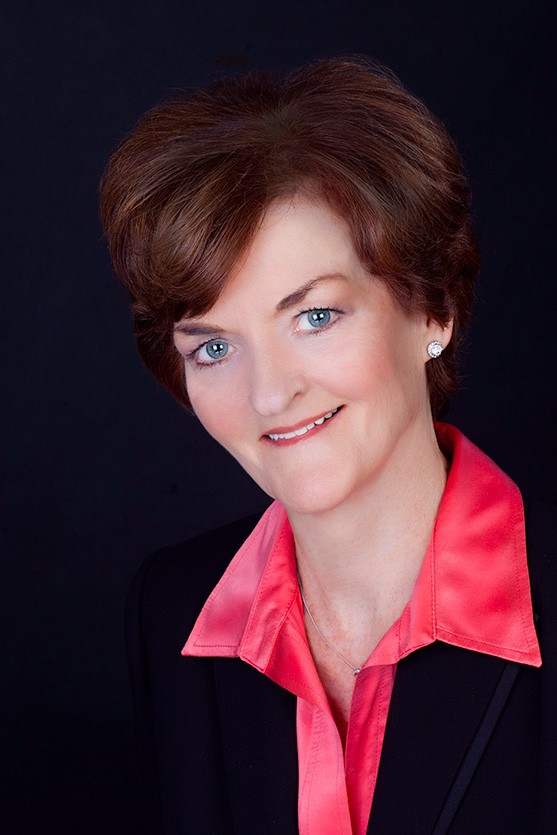
Toronto REALTOR® & Author

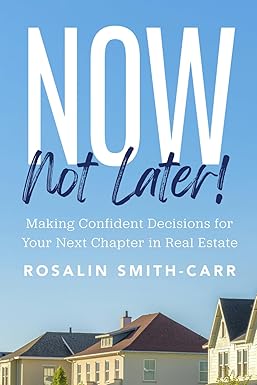
Now,
Not Later!

Making Confident Decisions for Your Next Chapter in Real Estate

Whether you're a homeowner ready to make your next move or a renter ready to break free from the cycle — this book gives you the clarity, confidence, and strategy to act now.

Get the Book on Amazon
Johnston & Daniel Division
Royal LePage Real Estate Services
REALTOR® License #1838635
Toronto Luxury Real Estate
"In Rosalin Smith-Carr, you have someone rare. Someone who understands that explanations create clarity, clarity creates confidence, and confidence creates the outcomes you most want."

— Founder, By Referral Only

Two Guides.
One Decision.
Your Next Chapter.

Most real estate decisions aren't made at the wrong time — they're delayed at the right one. Now, Not Later! is Rosalin Smith-Carr's definitive guide to cutting through market noise and making the move that aligns with your life, not just your spreadsheet.

Drawing on decades of experience guiding Toronto families through every kind of real estate transition, Rosalin distills the most costly traps buyers and homeowners fall into — and the practical, life-centered strategies that lead to confident action.

This book contains two complete guides, each crafted for a different reader at a different stage. Both share a single truth: waiting rarely wins.

Book One

Beyond the Numbers — For homeowners with equity, exploring the true cost of space, market obsession, geography of connection, and writing your next chapter.

Book Two

Breaking Free — For renters ready to stop building someone else's wealth. The rent trap, timing myths, inflation squeeze, and your action plan to ownership.

"Your life clock is more reliable than any market forecast — because it's based on realities you can observe and control."

— Rosalin Smith-Carr, Now, Not Later!

Explore Every Chapter

Book One For Homeowners

Beyond the Numbers: A Guide to Life-Centered Real Estate Decisions

Your home should serve your life, not consume it. Yet many homeowners spend their prime years managing properties that no longer match how they actually live. Empty bedrooms become storage, formal rooms become mail stations, yards become obligations.

The cost differential between maintaining 5,000 versus 2,000 square feet of similar quality can easily reach $50,000 to $150,000 over ten years — in utilities, maintenance, insurance, and property taxes alone. Beyond finances lies cognitive load: the mental effort required to manage systems and coordinate maintenance that depletes your time and energy daily.

  • Understanding the financial reality of excess space
  • The hidden drain on time and personal energy
  • The emotional weight of rooms you no longer inhabit
  • Alternative solutions: from reconfiguring to outsourcing
  • Making informed, honest space decisions
Headlines scream about interest rates. But for established homeowners with substantial equity, the traditional affordability equation has changed entirely. A homeowner with $750,000 in equity purchasing a $800,000 home only borrows $50,000 — creating a very different monthly reality than a first-time buyer financing the full amount.

Every two years of waiting for better market conditions, carrying costs alone could reach $40,000 to $80,000. The most important calculation isn't the percentage — it's the equation between the life you're living and the life you want.

  • How equity changes your rate sensitivity entirely
  • The hidden costs of waiting that most people never calculate
  • Breaking free from rate fixation and emotional attachment
  • Modern refinancing flexibility previous generations didn't have
  • Redefining value beyond numbers and monthly payments

Where you live shapes who you see and how engaged you remain with the world. Distance grows heavier with time. What feels like a reasonable drive in your sixties can become prohibitive in your seventies. Research consistently demonstrates that social isolation accelerates cognitive decline and contributes to earlier mortality.

Grandchildren don't pause their development waiting for ideal visiting conditions. The grandparent who lives an hour away attends major events but misses the casual moments that often prove most precious.

  • Why proximity to family and friends deserves more weight than square footage
  • Healthcare access as a critical location factor that grows with age
  • Community involvement and how distance silently reduces it
  • Strategic proximity planning for today and the years ahead
  • The investment value of connection versus the cost of distance

There are two clocks governing your housing decisions: the market clock and your life clock. Professional economists and Federal Reserve officials — armed with sophisticated models and full-time research — regularly miss the mark on rate forecasts. Individual homeowners have even less chance of successfully timing their moves to coincide with optimal financial windows.

The homeowner who waits three years for better conditions to move closer to family misses three years of school events, three holiday seasons, three summers of visits. No interest rate savings can purchase those experiences after they've passed.

  • Why market timing is sophisticated procrastination in disguise
  • The mathematics that prove waiting rarely justifies the delay
  • Life-centered decision making over hypothetical market gains
  • The refinancing safety net — and why it changes everything
  • Personal readiness over market perfection

A home is the stage where your life unfolds. Every life contains multiple chapters, each requiring different settings. The trap many homeowners fall into is attempting to write their current chapter in settings designed for previous ones — clinging to family homes after families scatter, maintaining large properties when interests have shifted.

Your equity represents stored potential that can be deployed strategically: purchasing proximity to grandchildren, freedom from maintenance, or financial flexibility for deferred experiences. The only question is whether you'll write your next chapter in a setting that serves the story you want to tell.

  • How to envision and plan for your next chapter honestly
  • Deploying your equity strategically — not just financially
  • Geographic considerations for a new chapter in your life
  • Managing family dynamics and the role of possessions
  • Embracing change as addition, not subtraction

Book Two For Renters

Breaking Free: A Renter's Guide to Homeownership

When you rent, every dollar belongs to someone else. Month after month, you build equity — for your landlord, not yourself. Your rent covers their mortgage principal, pays down their loan balance, and increases their net worth. Meanwhile, you receive thirty days of housing, and then the cycle starts over.

Unlike mortgage payments, rent never stays fixed. Annual increases slowly push costs higher while you build no equity to offset rising expenses. The comfort of renting disguises the true cost of temporary convenience.

  • The hidden transfer of wealth happening every single month
  • Why rent never stops rising — and what that means for your future
  • The opportunity cost of comfort and the flexibility myth
  • Real numbers: what renting vs owning looks like over 10 years
  • Breaking free from the cycle — your first step to freedom

The belief that perfect market conditions will align to create ideal buying opportunities is one of the most seductive and expensive myths in real estate. Real estate markets are influenced by dozens of variables that never align perfectly. What "perfect timing" would actually require — low rates, low prices, high inventory, stable employment, and personal readiness occurring simultaneously — simply doesn't exist.

The most successful real estate investors understand: time in the market beats timing the market. Wealth is built through ownership duration, not purchase timing.

  • Why perfect conditions don't exist in any market, ever
  • The moving goalpost problem that keeps renters on the sidelines
  • Real case studies showing the true cost of waiting
  • Why experts can't time the market — and neither can you
  • When renters actually should buy, and how to know

Inflation attacks renters from multiple directions simultaneously: home prices rise, rents increase, construction costs climb, and savings lose purchasing power. Every month spent accumulating "just a little more" often results in needing significantly more.

If home prices inflate at 6% annually and you can save an extra $1,000 per month, you need to be shopping for homes under $200,000 just to break even. For higher-priced homes, inflation outpaces savings capacity by wide margins. Fixed-rate mortgages protect against inflation by locking your largest expense while the asset typically appreciates.

  • How inflation affects renters from every direction at once
  • The compounding effect that makes delays exponentially more expensive
  • Why saving faster almost never beats the pace of rising prices
  • How fixed-rate mortgages become a powerful inflation shield
  • Your inflation protection plan — buy when you can afford the payment

Extended renting creates hidden costs that no financial calculator captures: the limitation of life experiences, the postponement of dreams, and the psychological weight of temporary living that stretches into years. Rental agreements restrict modifications, preventing you from creating spaces that truly support your lifestyle.

Renting creates a temporary mindset affecting every aspect of daily life. The less you invest in your space and community, the less attached you become — and the easier it is to convince yourself that renting "just one more year" isn't a big deal. Meanwhile, years pass.

  • The temporary mindset trap and how it silently shapes your decisions
  • Creative, professional, and personal limitations renters never name
  • The relationship and family impact of indefinite renting
  • Community connection and what you're missing by staying temporary
  • The psychological weight of impermanence — and what freedom feels like

The transition to homeownership begins in your mind, not your bank account. Successful renters share certain mental shifts: from perfect conditions to good enough conditions, from renting mentality to equity-building focus, from flexibility fears to stability benefits.

Rosalin provides a structured four-stage timeline: Foundation Building (months 1–2), Active Searching (months 3–4), Making Offers and Closing (months 5–6), and First-Year Strategies for financial management and community integration. The difference between those who succeed and those who stay stuck isn't financial capacity — it's the decision to act despite uncertainty.

  • The three essential mindset shifts that precede every successful purchase
  • Your complete readiness assessment: financial, life stability, emotional
  • Overcoming the fear of mistakes, market timing, and responsibility
  • Rosalin's four-stage timeline from decision to closing
  • First-year strategies: financial management and community integration

Answers to What Everyone Asks

For established homeowners with substantial equity, the traditional affordability equation has changed entirely. Your equity position often insulates you from rate sensitivity far more than you realize. A homeowner borrowing only $50,000 on their next home is affected very differently by a rate change than a first-time buyer financing the full purchase price. The most important calculation is not the interest rate percentage — it is the equation between the life you are living and the life you want. Today's homeowners also retain the option to refinance if rates fall significantly, removing the need to wait for perfect conditions before making a move. Contact Rosalin to discuss your specific equity position and options.
Every month of rent transfers wealth to your landlord, not to yourself. Inflation attacks renters from multiple directions simultaneously — home prices rise, rents increase, and savings lose purchasing power. The right time to buy is not determined by market conditions — it is determined by personal readiness: stable income, funds for a down payment, and readiness to stay in the area for several years. None of those factors depend on interest rates or market predictions. They depend on your life circumstances and financial capacity. Rosalin can walk you through a readiness assessment to determine your next step.
There are two clocks governing your housing decisions: the market clock and your life clock. Your energy, health, and relationships operate on a timeline that does not pause for perfect market conditions. When your current home no longer supports the life you want — when distance keeps you from people you love, when maintenance demands exceed your interest in managing them, when health or energy concerns suggest simplification — those signals matter more than any economic indicator. Making changes while you have full energy and choice typically produces far better outcomes than waiting until circumstances force hasty decisions.
Over a ten-year period, the cost differential between maintaining a larger home versus a right-sized one of similar quality can easily reach $50,000 to $150,000. This includes higher utilities (every additional 1,000 square feet can add $4,000–$6,000 annually), increased maintenance, elevated insurance premiums, and greater property tax assessments. Beyond pure finances lies cognitive load — the mental effort required to manage systems, coordinate maintenance, and maintain spaces you rarely use. This depletes time and energy that could be invested in relationships, experiences, and personal fulfillment.
Rosalin Smith-Carr is a REALTOR® with Johnston & Daniel Division, Royal LePage Real Estate Services Ltd., Brokerage — Toronto's premier luxury real estate brokerage, serving generations of Toronto families since 1950. Johnston & Daniel is the only real estate brokerage in Canada backed by two powerhouse brands. Rosalin brings decades of experience guiding buyers, sellers, and renters through every type of real estate transition with clarity, patience, and expertise. Call or text her directly at 416.409.6896 to discuss your specific needs and goals.
You can reach Rosalin directly by mobile at 416.409.6896, by office at 416.489.2121, or by email at rsmithcarr@icloud.com. She welcomes calls, texts, and emails — simply get in touch and she will guide you through your next step. Her brokerage website is johnstonanddaniel.com. REALTOR® License #1838635.
Rosalin Smith-Carr — Toronto REALTOR® and Author

Work with
Rosalin

Rosalin Smith-Carr is a Toronto luxury real estate expert with Johnston & Daniel Division, Royal LePage Real Estate Services Ltd., Brokerage — Toronto's Standard of Excellence in real estate since 1950. She guides homeowners and buyers through every transition with uncommon care, clarity, and presence. Ready to talk about your next chapter?

📱
Mobile 416.409.6896
click to copy Copied!
Office 416.489.2121
click to copy Copied!
Email rsmithcarr@icloud.com
click to copy Copied!
johnstonanddaniel.com — Johnston & Daniel Division, Royal LePage
REALTOR® License #1838635

Now, Not Later!
is waiting for you.

The best time to make a confident real estate decision is now — not when conditions are perfect, but when you are ready. Get your copy today and start your next chapter with clarity.